Artist interview: Lim Heng Swee of ilovedoodle

I want to introduce you to Lim Heng Swee, whose illustrations for his brand ilovedoodle has made him a bit of a celebrity within the Threadless community and on Etsy. He’s proof that it doesn’t matter where you live (he’s based in Malaysia) to be able to succeed as an artist – especially when you know what success looks like. I originally interviewed him for my course Work/Art/Play, and I wanted to share this interview with you because he’s one of the most inspiring and generous artists I’ve ever come across. I hope you’ll enjoy the interview – and feel free to send the link to this article to your friends!
 

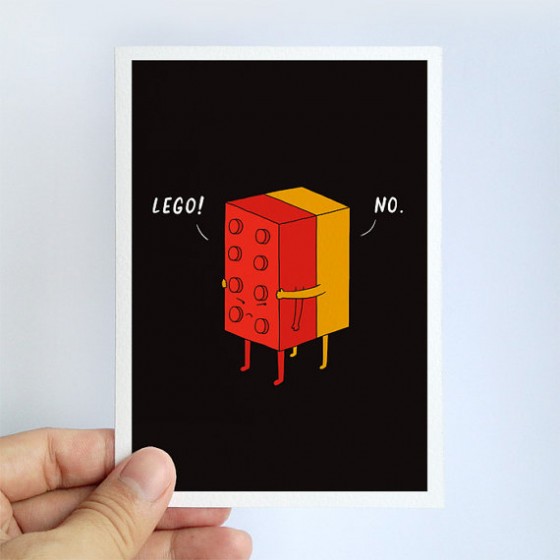
il_570xN.566707020_805h

Hi Heng Swee! I find it really interesting that you’ve created a name for yourself through illustration. Tell us a little bit about yourself!

Hi there! My name is Heng Swee and I’m an illustrator based in Malaysia. I studied mechanical engineering but within a few months after I graduated (and took on a job as an engineer), I quit and became a full time artist because I wanted to just draw.

How did you get your start? Did you study art before?

I didn’t study art – I studied to become an electrical engineer, so I’m a self-taught artist.

il_fullxfull.236885677

Tell us a little about how you arrived at where you are today.

In the beginning, I didn’t know anyone who needed an illustrator, so I flipped through a few magazines and newspapers and saw that none of them had any illustrations in them. So I studied what they lacked and came up with a proposal to each of these publications, and drew a few strips and illustrations for them to show them what I mean, and to show them what my style was like. I got a lot of jobs that way when I first started out. If you’re just starting out, this is a great way to vet clients because when you do the work first, they’ll know what to expect and will not ask you to change your style to suit them because they can see offhand what it looks like.

You are famous also through your Threadless submissions. Can you tell us how it all began? 

I was searching for opportunities for illustrators online as I was about to move to the UK for a one-year working holiday, and wanted to be able to still draw and make a living that way. When I found out that you could earn money illustrating a t-shirt, I was sold – the prize money back then was a big amount: USD2,000 for the winner. I came up with ideas and submitted my work diligently. I created a lot of illustrations on Threadless!
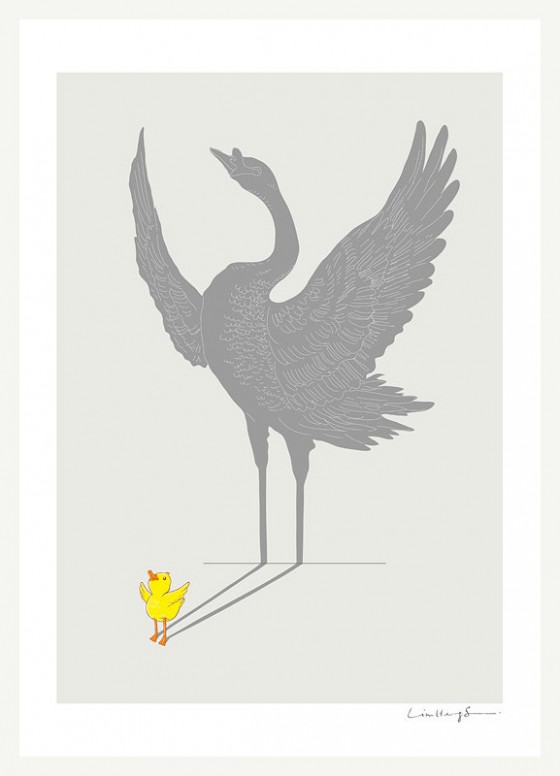
il_fullxfull.442541175_tduk

You project “Doodle Everyday” was a big hit – can you tell us the reasons behind it?

Before I started on Doodle Everyday, the only place where I submitted my work was on Threadless. I’ve done a lot of illustrations that were picked by the community in the 2 years when I first started, and it helped me build up my style through the experience I garnered there (the voting, comments, etc). But after 2 years of working on the Threadless platform, I began to feel that I was producing work according to what the masses had wanted, instead of what I wanted. So I started Doodle Everyday as a form of  daily challenge for myself to try out different ideas and themes, instead of merely thinking about what the customers at Threadless would want. I had a lot of exposure from that project – it got picked up by a few major blogs, including Swiss Miss. It was a period of major growth.

How do you come up with ideas for your illustrations?

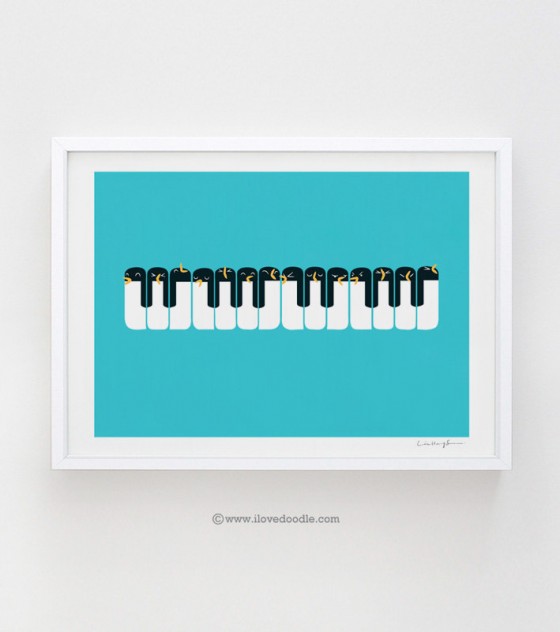
I always like to think about things – often time mixing things together to form something new. For example, one minute I would think about a penguin, with it being black and white – and then I’d try to link it to something else that might share the same characteristic, which brings me to a piano, with its black and white keys. So then I try to combine these two together in a way, and figure out what do they have in common? What sticks out? That’s how I came out with the “Choir for Antartica” print. I just love to inject a sense of humor into my work.

il_fullxfull.652922694_sg1x

Your Facebook page has more than 80K likes! Can you tell us how that happened?

It all happened organically – but the major growth was due to the Doodle Everyday project that I started in 2011. People signed up to get regular updates and to see what new doodles that I posted up.

Where do you sell your goods? And which outlet has garnered the most sales for you? Is this your main income stream?

So after illustrating for Threadless for 2 years, I discovered Etsy. And I was blown away by the opportunities that it offered artists. I had never ventured into print before, but after seeing how prints were selling pretty well, I decided to open an Etsy shop to sell my prints. Prior to that, I had to depend on winning the Threadless competition to make sure that I could support myself. With the Etsy shop however, I could have a regular income because I could now get my work printed up – I didn’t have to win a competition, and I didn’t need to be picked by anyone. The Doodle Everyday project has created a lot of illustrations that I could use for different items.
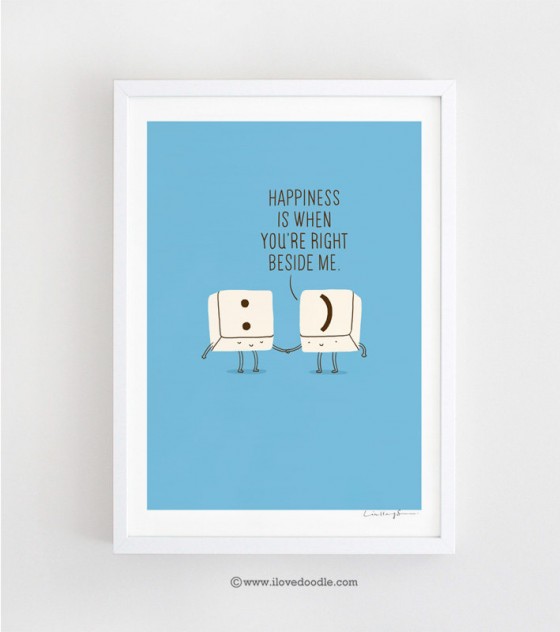
il_fullxfull.640124555_4sg6

Do you print your items by yourself, or do you use a 3rd party service? What’s your advice for those who don’t know where to start?

I use my own printer to print, as I felt that using 3rd party services was unreliable in Malaysia. With this I could control the quality of the print as well as the type of paper that I could use. I did a lot of online research into which printer was the best, and I couldn’t get good quality archival, acid-free paper here, so I order mine online.

I saw that you also went into licensing – how is that working out for you?

It’s working out great – licensing isn’t my mainstay at the moment, but I have gotten offers for work from China and Hong Kong through being seen online.
il_fullxfull.437458475_py4n

How do you determine your licensing rates?

I usually go by my experience with Threadless (they now offer royalty instead of a prize money) – but it also depends on the scope of the project. I also refer to the book The Graphic Artists Guild Handbook: Pricing & Ethical Guidelines.(via Amazon)

What sort of marketing efforts have you put into promoting your work? What has worked and what hasn’t?

A lot of my work has been through word-of-mouth and through referrals and repeat buyers. I haven’t been actively promoting myself, aside from regular posting on Facebook and updating my blog. I find that having fresh content up on a regular basis really helps to drive interest back to my work.

What would be your advice to other artists out there in carving out your own future and success? 

It’s really important to start with what you want out of all this. I like to share this story about a Mexican fisherman, which goes along something like this:

=====

(Taken from http://bemorewithless.com/the-story-of-the-mexican-fisherman/)

An American investment banker was at the pier of a small coastal Mexican village when a small boat with just one fisherman docked.  Inside the small boat were several large yellowfin tuna.  The American complimented the Mexican on the quality of his fish and asked how long it took to catch them.

The Mexican replied, “only a little while. The American then asked why didn’t he stay out longer and catch more fish? The Mexican said he had enough to support his family’s immediate needs. The American then asked, “but what do you do with the rest of your time?”

The Mexican fisherman said, “I sleep late, fish a little, play with my children, take siestas with my wife, Maria, stroll into the village each evening where I sip wine, and play guitar with my amigos.  I have a full and busy life.” The American scoffed, “I am a Harvard MBA and could help you. You should spend more time fishing and with the proceeds, buy a bigger boat. With the proceeds from the bigger boat, you could buy several boats, eventually you would have a fleet of fishing boats. Instead of selling your catch to a middleman you would sell directly to the processor, eventually opening your own cannery. You would control the product, processing, and distribution. You would need to leave this small coastal fishing village and move to Mexico City, then LA and eventually New York City, where you will run your expanding enterprise.”

The Mexican fisherman asked, “But, how long will this all take?”

To which the American replied, “15 – 20 years.”

“But what then?” Asked the Mexican.

The American laughed and said, “That’s the best part.  When the time is right you would announce an IPO and sell your company stock to the public and become very rich, you would make millions!”

“Millions – then what?”

The American said, “Then you would retire.  Move to a small coastal fishing village where you would sleep late, fish a little, play with your kids, take siestas with your wife, stroll to the village in the evenings where you could sip wine and play your guitar with your amigos.”

=====

The story above goes hand in hand with a TED talk I watched about how Stephan Sagmeister brings his ideal retirement life into his current schedule, by taking an extended time off from work every few years to rejuvenate himself and to create a well of information that he could tap into for the following few years. And it goes on and on, like a cycle. He doesn’t believe in the concept of retirement as finite, or something you can only enjoy at the end of a grueling work life. It has to be hand in hand, because work is so engrained in our lives – it takes up a big part of our time, so why shouldn’t it be enjoyable at the same time?

So my advice is to know what you want, and spend your time planning your work, schedule and environment to mirror what it is that you want in life. For me, it was always about drawing – so my choices, and the path that I choose has got to align with my goals of being able to draw.

———–

You can see more of Lim Heng Swee’s work through Etsy, Threadless and on his website.

Lessons on how to bounce back after an unproductive rut


As you’ve most probably read in my previous post about how the final weeks of December through to February has been the most unproductive for me work wise, I’ve tried to identify what the reasons were for this lapse in productivity. After all, it’s a good 3 months off my calendar – a quarter of the year that could have been spent on getting my hands dirty and my schedule full: new clients, portfolio, projects, etc.

So I’ve whittled it down to 3 things on my end – maybe you could identify with some of these issues that I’ve faced and maybe, just maybe, it’s what’s holding you back too. And of course I’m not going to leave you hanging! Once you’ve gone through the list, I’ll let you in on what worked for me for hauling my butt into gear!

Problem #1: Holidays

Ah, the good ol’ holiday season. For some it can stretch from November to January, or maybe it could be spring/summer/winter holidays. Or maybe you’re just back from traveling and have trouble getting back into the swing of things. Hey it happens – we need a holiday right after our holidays! Holidays are great though – they allow you to recharge after a hectic year, and helps to balance out the challenges of work and life. But starting up a routine again after a few weeks or a couple of months of not doing much work-related stuff (or maybe you’re only doing the fun stuff) is almost like switching the ignition of a parked car that’s been idle for a few months. It groans, heaves and simply doesn’t comply. Rattling it all the more might give you more sighs and fake starts, but you’ll soon notice that no amount of cajoling will bring it to life. Welcome to the post-holiday blues.

Problem #2: Emotional stress

I was a bit of a wreck in October, after I lost my dog to cancer. I won’t lie – it was hard leading up to the final moments. I had a class to run as well, all I could do was to hold it in and just compartmentalise my thoughts and emotions, doing things proactively instead of just worrying too much with nothing to show for it. So my time was divided between managing my classes and doing research on canine cancer, along with finding alternative therapies to help make my dog more comfortable. I was pulled into a few different directions and my emotions were running on the highest of highs and the lowest of lows. I was lucky that I was working while I took care of my dog, because it allowed me to break away, even if it was just a few hours everyday. The downside to it was that I was a bit of a mess for a couple of weeks after everything ended. I felt as though a big weight was lifted off my shoulders as the compartments I had assigned within my mind all crumbled away. I felt everything all at once. I was tired.

Problem #3: Being unwell

I had severe acid reflux for 3 weeks prior to my Melbourne trip, out of the blue. I was nauseous all the time, and didn’t have any appetite to eat (the constant nausea had a lot to do with that), and to top it all off, I couldn’t sleep lying down because bile would come up into my throat. A round of blood tests and ultrasounds later, I found nothing that could explain my symptoms. I finally found the cause after a bit of fluke – it turned out that a particular medicine I was taking had caused the symptoms. Once I stopped, everything returned back to normal. So while my body took quite a beating a month back, I’m much better. I’m still tired though, and feel as though I’m still catching up on the sleep that I lost.

Finding your flow: A 4-step process

So those were the 3 issues that I faced during the last few months. It might be different for you depending on what you’re facing at the moment, but I’ve found that it doesn’t matter what you’ve experienced – the important thing is to get back up on your feet. I recently started to focus on how I could propel myself out from this bit of a slump and I found that the below tips work really well for me. So while I’m still gaining steam to get back into full-on work mode, I know I’ll get there! And here’s to hoping you will too.

Tip #1: Rediscovering inspiration

When you’re sick/emotional/away from your desk (or your workplace), it takes a bit of time to get back into the swing of things. I know this because with the crazy highs and lows that come with all the above mentioned scenarios, sitting still at a desk and actually doing work doesn’t sound attractive at all. Nope siree. So it’s either inspiration overload (holidays) or I-am-not-in-the-mood-for-anything (emotional/being ill) sort of situation.

What worked for me this time round was to slowly allow a bit of online perusing to trickle into my schedule. As a personal rule, I don’t often visit blogs or Pinterest. I prefer to do my reading through an RSS reader (Pulse on the iPhone) and as for Pinterest, I only allow myself a 15 minute peek every now and then because otherwise I’d look up from my computer and realised that I lost an hour in what I now refer to as the Vortex of Time Suckage.

So what happened was that by injecting my eyeballs with these sort of short doses of imagery on a daily basis, it got me pumped up again. In a kick-in-the-ass pants kind of way. The one where you clutch your hair, slap your forehead and go “That so-and-so who did this-and-that is A-M-A-Z-I-N-G! WHAT THE HECK AM I DOING WITH MY LIFE?!” You know, existential questions.

At least that’s what worked for me. Every time.

Tip #2: Reorganising your workspace

I love clean tables. I just haven’t been able to maintain one for a very long stretch of time.

Just to lay it all out on the table (ahem); I’m not the most organised person in the world when it comes to my desk. I have 2 – 3 different sketchbooks (because I like having separate books for each project) and a weekly journal propped open, all strewn about – depending on what I’m working on. I also have some loose papers flying about: printed materials, bills, notices, boring stuff so that it forces me to do something about them. Filing them away means never ever getting to them so they’re there staring at me until I settle them once and for all.

So yes, there’s bound to be a mess here and there; but it’s an organised mess and it’s the sort I don’t mind because I know what lies where and when. Clearing my desk is a task I enjoy, because with every task I finish, I get to clear it off my table. Physically.

Those letters and boring stuff? All gone. Those sketchbooks that I have haphazardly strewn around? I sometimes close them (gasp!), set them aside and choose to focus on one thing for a while. I do this each time I wrap up a big project, but also when I’m feeling a little meh. Clearing things away and reorganising my workspace helps me fill in the mental void I feel whenever I’m away from my desk for too long. When I give my desk a once over, I discover things that are left unsettled, projects that need filing, and obligations to fulfil. Knowing where I am and what needs to be done quickly kicks me into problem-solving mode, and then I realise it wasn’t all that bad. Once I took care of the boring bits, I get all tingly about starting fresh. Because it means that there’s now room for new things. Exciting things.

Tip #3: Creating deadlines and sticking to it

You know what has also really worked in getting me back into work? Deadlines.

If you’re a fellow procrastinator who’d rather wait until the final hours to a deadline before you even feel a glimmer fear, I feel you. Self imposed deadlines can sometimes be dodged (AHA!), but when you’ve got a commitment to others, you’re trapped. So what do you do? You give up the cheese. You’ll scramble for a bit and curse yourself for binge watching Downton Abbey while eating a truckload of cookies. But then adrenaline kicks in – you dust off your computer, crack your knuckles and get down to business.

Setting a date for projects and tasks and actually pencilling them into your calendar (I use Google Calendar) will help you get a bird’s eye view of your schedule. It also allows you to see how much time you have to do non-business/fun stuff (no judgement – let’s get real here) and how much time left you have to work on a particular task or project. I’ve found that having rigid time slots makes me feel claustrophobic, so I set goals for each day and allow my own rhythm to decide when I want to do it.

Break down your major project milestones into things you can do every day – don’t just schedule the deadline on a date with no idea on what you need to do to make it happen. There’s nothing wrong with being a little disorganised, but you’ll need to know what needs to get done, period. When or how it happens is entirely up to you, and once you’ve had a good think about how you’ll manage things, slacking off isn’t a bad thing. Because if you know what you’re doing and then it becomes purposeful slacking. There’s a difference!

Tip #4: Follow through on your new routine

I start my day with a shower and a bowl of yoghurt and muesli for breakfast. Sometimes I slip in a 10-minute yoga stretch, but to be honest, I haven’t been doing those for a little while. Doing it makes me feel better though, so I’m starting it up again (writing this just reminded me of it). After breakfast, I putter about in the garden and put my herb containers out in the morning sun before going to my desk to start my workday. That’s been my routine for the past couple of weeks.

For you though, maybe it’s when you make a cup of coffee and sit at the table, or when you go for a jog in the morning before you start your work. Building up a routine is definitely something I recommend for freelancers or those who work from home. And I’m not the only one. Ever notice how out of whack you get when your schedule gets messed up a few days/weeks in a row? That’s what happens when you run into the 3 problems I mentioned above: your routine gets screwed up. Going back to a routine is one the best things you can do to fan the flames of productivity.

Find out when your body works best – is it during the day? Or after lunch? Or perhaps you’re more relaxed at night? Knowing and recognising the cues your body and brain is trying to tell you will help you work more efficiently instead of merely pushing through the motions. Do you feel like a nap? Go ahead, take one. Are you in the zone and need total silence and concentration for an hour? Do it. Map out the times when you feel your best in a diary and when you’re not; and it will help you go a long way in getting things done.

No one ever said that you’ll need to work at your desk for 8 hours straight to be productive – maybe it’s how you like it, but I know I can’t do those anymore. As I grow older, I find myself breaking my day up into chunks – a block of time where I’m being really productive, and there’s a block of time where I’ll be catching up on fun TV show or a book. Because my hours aren’t quite set, my productive periods can run into the night as well, occasionally. I love that about working from home.

So there you go! I hope you find these tips useful – they’re what I’ve personally done to get myself into my work chair this week. I’m going to level with you on this: you’re not going to wake up productive the next day. Some people might, but like a sugar rush after eating a whole bowl of M & M’s – it’s only temporary. So don’t worry if you’re taking a little longer than usual to shake yourself off of whatever’s got you down. You’ll get there!

SHARE WITH ME:

If you know how it feels like to be down and out and managed to snap out of it, why not share your story and tips to help out other fellow artists? Shout it out in the comments!

And if you like this article, don’t miss a beat – sign up for the mailing list where you’ll get an email whenever I have something worthy to share (and it includes the full article mind you – I don’t do link-baity stuff – yuck). If that’s music to your ears, then here’s where you can sign up for Pikaland’s fun and free newsletter!

[Embroidery by Karolin Reichardt, for her 2014 series called Iceberg.]

The madness that was Chinese New Year

The beginning of each year always seems like a mad rush for me. There’s Christmas, and then New Year and pretty soon before you know it, Chinese New Year has come around, complete with cymbals, angpows and a good dose of firecrackers. (That video above perfectly illustrates what I feel like right now). I feel as though the beginning is just beginning – again – as the last of beginnings roll around.

Maybe that’s a good thing. Think about it – if you lost a bit of fair time recuperating for hectic year-end holiday season during New Year, you can always think of Chinese New Year as your much needed boost to wipe the slate clean (especially when your resolutions haven’t quite kicked in yet).

A resolution for resolutions perhaps?

All I know is, that’s my story and I’m sticking to it!

Happy Chinese New Year all, and if you’re in need of some goat puns to ring it in (there’s just so many this year!), here’s a good recap of the ones that are currently running in South East Asia. And this.

I kid you not. (see what I did there?)

{ Video by Flatmind, credit goes to Elia Gardella and a team. See more details over at Behance. }
1 7 8 9 10 11 42