Copying other people’s art technique or style? You’re copying the wrong thing.

Anna Lomax

Every other day I hear about how an artist gets their work copied by another artist. It could either be a popular artist who has her work plagiarized by another, lesser-known artist (which we’re going to discuss about here), or they’re being ripped off by big organizations.

Now, I’m no fan of plagiarism – particularly when big organizations take advantage of artists and do not give them their dues. I believe that there’s a bit of miscommunication in there somewhere, and ultimately the chain of command is long enough that the blame falls on an individual, rather than the entire corporation itself, but then I’m digressing. Copying is wrong, especially when profit is being made off of another person’s hard work.

But over here, I want to talk to you – the ones who copy others. We’ve all done it sometime or other before – copying another person’s style or technique; all in the name of learning. I know you don’t want to profit from another artist’s work (unless you do, in which case you might not exactly be the person who would be interested in what I have to say), but it was all done without a mean bone in your body right? It’s not meant to bring attention to yourself (even if it did, it would be the wrong kind of attention, I can guarantee you that much). So here’s a little advice for you – stay away from putting these sort of learning exercises online. Don’t put it up on your blog, or Instagram it, or put it on Flickr. Let it reside in your sketchbook, where it will only see the light of day when you will it. And that the only pair of eyes that it will ever see is yours.

Besides that though, if you’re merely copying the style and technique of an artist, you’re not learning much at all. You might learn something new that you can include in your repertoire of skills, but it’s not all there is to it. You see, there’s an even bigger take-away from all of this. A more important angle that you’re missing. One that you might not have even thought of before.

Stories, ideas, concepts, process.

Now those are the things you need to watch out for. They’re the most important elements that you can learn from an artist – the way they see, and the way they process their stories make for even bigger lessons than you’ve ever imagined. Because the biggest challenge when it comes to drawing isn’t so much about the technique – a big chunk of it has to do with the content. A pretty picture may arouse a few seconds of interest, but if you go beyond and find that it’s merely a hollow shell, you won’t remember it at all. Once you’ve set your sights on art and illustration that makes you think, or one that informs you about an idea, or a piece that delights and surprise you – it changes the game completely.

Taking with you the process and ideas of another artists will only strengthen your vision, when you make it your own. Look at it through your own eyes – filter it, digest it, and recreate things that hold your vision true. Don’t just take in things visually. Learn to listen instead – and you’ll find yourself learning about the true meaning of art. And you’ll never be second best if you do.

[Want more stories about plagiarism?: Check out issue #7 of the Good to Know series!]

SHARE YOUR STORY:

I’d love to hear from you – what lessons have you learnt by looking at other people’s work? And if you feel the need to confess, then by all means it’s time to let that burden go – tomorrow’s a new day!

If you like this article, remember to send it to friends who need it (know anyone who copies someone else’s work?) – use the social plugins below to spread the word, or just send them an email!
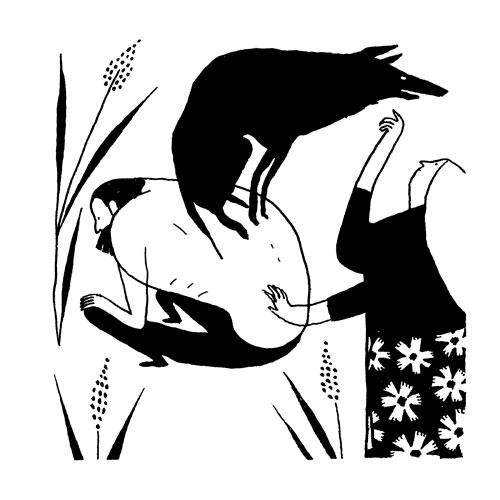
[Image by Anna Lomax]

Eleanor Davis

Eleanor Davis

Eleanor Davis

Eleanor Davis

Eleanor Davis

Eleanor Davis

Eleanor Davis

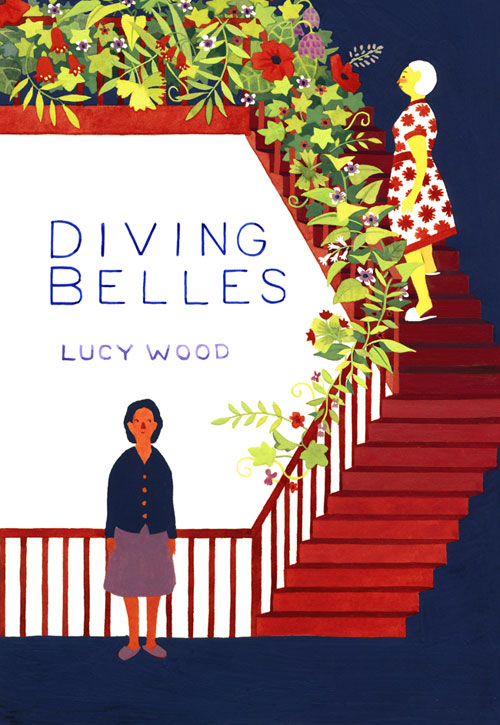
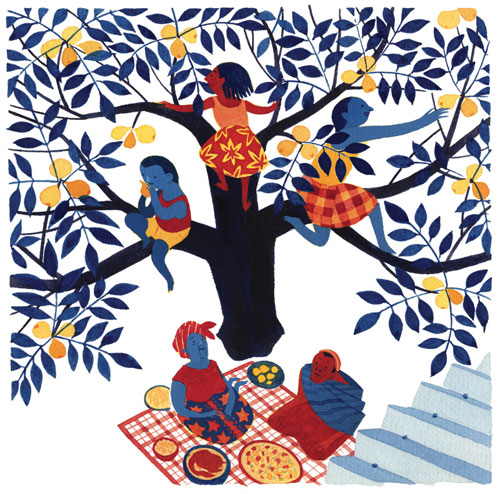
Eleanor DavisI’ve got a crush on Eleanor Davis‘ work ever since I found out about her a few years ago through the folks at Fantagraphics. I was surprised that I never got to showing her work on the blog, so I thought I’d put an end to that nonsense today. The images here are some of her recent work which you can see on her website.

She’s a cartoonist and illustrator who regularly posts about her work (these little comic shorts are amazing) so there’s always new things to discover. What I love about her is how her illustrations are framed – really interesting perspectives that when combined with her style (the control she has over watercolor is magical) creates illustrations that really draw you in to see what’s happening. I also noticed that she has a lot of illustrations and sketches of people warmly embracing – kissing, hugging, etc., – a playground of intertwining limbs (which is marvelous really, there’s not enough love going around!) Her work also makes me wonder: What’s her story, What’s his story. What’s their story. What is all this?

See more of her work on her website, and also make sure to visit her brilliant sketchblog.

It’s time to dig deeper.

Print by Madmanincognito

Print by Madmanincognito

I snapped yesterday in class. And it wasn’t pretty.

It happened after I gave a presentation to my class about the people, artists and brands who inspired me. I created a slideshow, showed video clips and shared about why they were special, and the patterns that link through them and how the students would benefit by thinking and going deeper into researching their own likes and dislikes; while understanding the reason behind the way these artists work.

I gave this presentation in turn – after hearing the class share a 5 to 10 minute presentation about who and what they’re inspired by last week. I prompted the presentation from the students after a round of exasperated hand-wringing and questioning yielded no answer to the question “who inspires you”. None in particular it seems. All of it a hazy blur. Let me be clear – some of them knew vaguely what they like. They just don’t know names, faces, etc; or how to articulate what it is that they like about the works they see. And that’s the biggest problem – either they’re barely skimming the surface or they’re not communicating their thoughts well. Either or; it was a problem nonetheless.

So when I went deeper and showed them what it means to go digging around for information (I was talking about Maira Kalman who researched about Abraham Lincoln who collected these findings into a book), I saw yawns. Glazed eyes. I saw people heading out to the restroom. And that’s generally okay with me. Maybe they had really small bladders or maybe they didn’t get enough sleep the night before. Fine. Then I heard shouts of “Wikipedia” – suggesting that it’s the place that people should go to for information – instead of Miss Kalman’s round-about way of going into Lincoln’s garden and collecting leaves, and her writing that seemed to ramble off information. I held my tongue. But when I started to ask about the names of the people who I’ve talked about on screen, a big giant blank went over the class. Names were uttered. Wrong ones. I wanted the names of 5 people. Not 10, not 20. FIVE. My face changed. The insides of my chest burned.

I was angry.

Angry because they were arrogant. Because they were over confident of their (at this point – very limited) abilities. Because of their nonchalance. But mostly it was because I cared. A little too much, I’m afraid.

They got me that list in the end after lunch. And I brushed my anger aside.

When I got back, I realize that I’ve left a lot of things unsaid although deep down I was frustrated at the whole affair. I tend to hold my tongue when I get angry – because I don’t believe in hurting people’s feelings – and so that’s what I did. Because I knew that when words are spoken it’s hard to unspeak them (or for that matter, for the other person to un-hear them). So I held back. Mostly.

But then I got to thinking. I should have told them that if I had Wikipedia, I could look it up myself – what do I need them for? What would the world need of artists or designers then? What would they be? Just another alphabet puncher on Google or Wikipedia? What would they hope to learn if they were confident in their assumption that they knew it all already? Would there be a place in their hearts and mind for knowledge if it was instead already filled up with self-righteous smugness?

Would they recognize golden nuggets of information if it hit them squarely in the face? Would they embrace digging? Would they voluntarily go a-hunting, not knowing what they would find, but revel in the journey instead? The unearthing of information, of facts, of emotions and science, and to put them together again with beauty? With clarity? Or perhaps shaped and moulded by their own hope and desires?

One can only hope.

I can only hope.

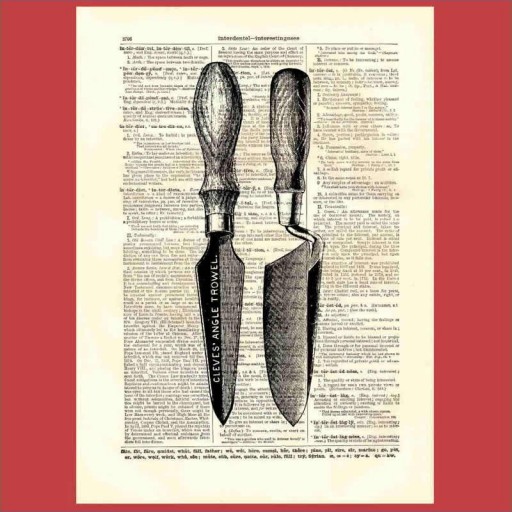
[Print by Jonathan Moore of Madmanincognito]
1 37 38 39 40 41 74