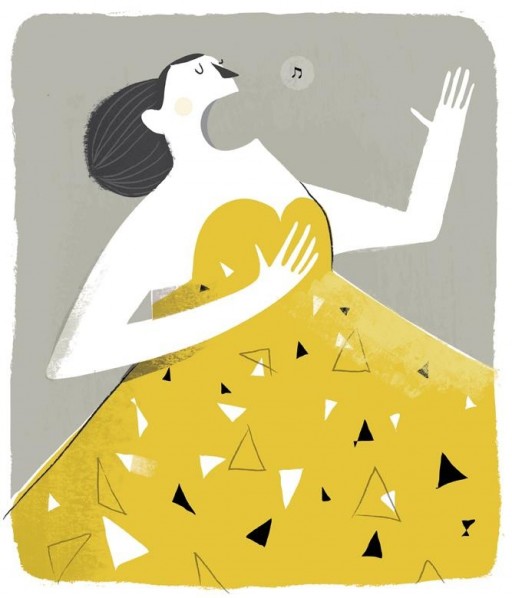
How to create great illustrations and comics

Brian Rea: Avoid This

I read a post by Seth Godin a couple of weeks ago, and in it, he mentions that:

“No one reads a comic strip because it’s drawn well.”

I almost yelled out a loud “YES!” (barred only by the fact that I was in a public place at the time) because that’s one of the main things I keep harping on and on about whenever I speak to students or people who tell me that their work isn’t good enough to be shown.

It’s not about coloring in the lines, nor making that perfect technically executed piece.

It’s not about making sure you’ve dotted out all your i’s and crossed all your t’s.

It’s not about comparing yourself to others, nor putting yourself up to impeccable standards set by others.

I’ve come across so many different illustrations, comics and graphic novels that might not be fit into the mainstream standard of “pretty” – but are powerful, thought-provoking and edgy. Here are a few examples:

Brian Rea: Avoid This

Avoid This – a collection of illustrations by Brian Rea (who also regular on the NYTimes, illustrating a segment called Modern Love)

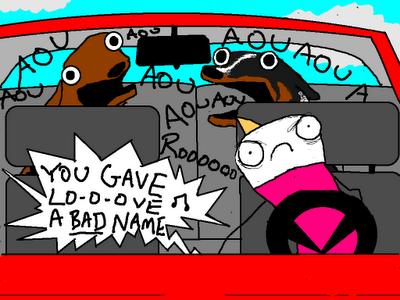
Hyperbole and a half

Allie Brosh illustrates how dogs don’t understand basic concepts at Hyperbole and a Half

Amanda Vähämäki : The Bun Field

Excerpt from The Bun Field (published by Drawn & Quarterly) – a collection of five stories by Amanda Vähämäki

Kate Beaton

Historical figures with a twist of humor by the inimitable Kate Beaton
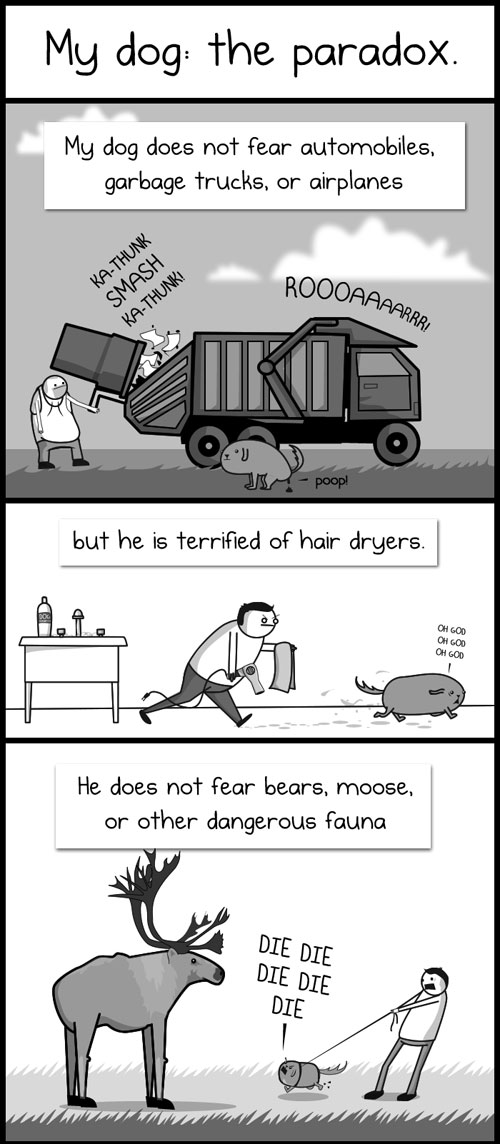
The Oatmeal - My Dog: The Paradox

The Oatmeal – a webcomic by Matthew Inman that pokes fun at almost everything under the sun.

Ryan North - Dinosaur Comics

Ryan North draws dinosaurs that talk in Dinosaur comics

Cyanide & Happiness

Rob DenBleyker for Cyanide & Happiness

It’s all about the story behind them that makes them stand out. 

Just think about it:

What makes you want to scribble your thoughts down so quickly that you don’t mind the messiness of the process? What experiences, thoughts and things that you want to say that you find yourself continuing your lines right off the edges of your sketchbook – just so you won’t have to turn the page and lose that train of thought?

What propels you get your ideas out there as fast as possible?

Great illustrations/stories/comics start with ideas first, execution second. If your idea doesn’t resonate with others, no amount of great execution can help – and on the other hand, if you have a great idea, execution is secondary to the transmission of the idea itself.

Your fans (or non-fans) will figure it out sooner or later, no matter if it’s the former or the latter.

More: Cyanide & Happiness

——————————-

If you like reading this post, think of all the goodness you could miss out on, just because you’re busy! I’ll make it easy for you to keep up by sending you an email once a week when I write something new. Cool? You can sign up over here!

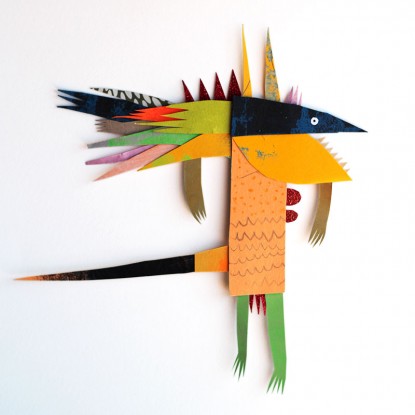
Marta Madureira

Marta Madureira

Marta Madureira

Marta Madureira

Marta Madureira

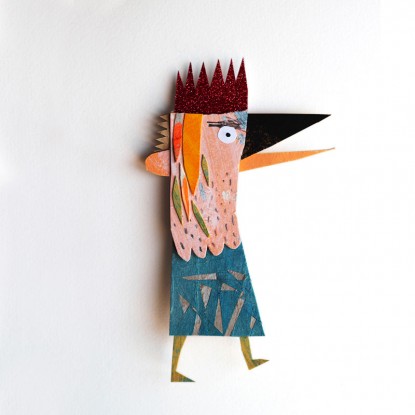
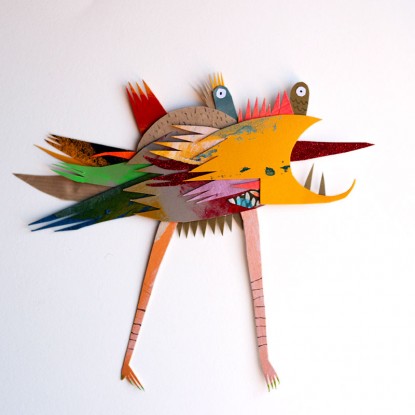
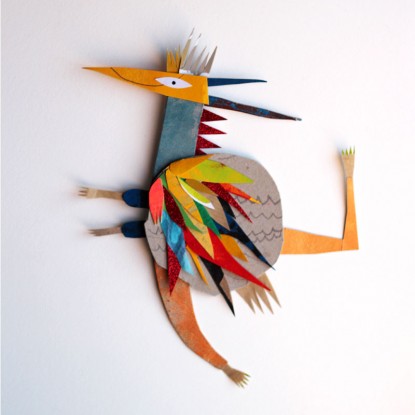
I’m inspired this week by Marta Madureira, an illustrator from Portugal. Her website only links to her email at the moment, but a quick Google Image search unearthed a lovely portfolio inspired by colors and textures. I discovered her through Pinterest and fell in love with these original works, which are up for sale at the Lusa Mater website. I think what’s so beautiful about them is how the intricacy of patterns and the bright hues of colors come together to create an explosion of unique, one-of-a-kind creatures.

Quick note: I’m going to take a break from writing for a bit and indulge in a spot of visual regurgitating until January 2014! But there’s going to be fun projects in store next year and if you’d like to keep up with me, you can always sign up for the weekly newsletter here!

[Via Telma’s Pinterest account]

Artists & illustrators: Have you used your superpowers lately?

Marie Mainguy

Marie Mainguy

My first contact with illustrations were from children’s books. Whenever my parents would head out for errands or to the shopping mall, they’d drop us off at the bookstore (this was when the world was much safer) and come pick us up when we’re done. They said that I’d be studying the books – both images and text to the point where it seemed like I disappeared into my own little world.

My mom also frequented a second-hand bookstore right below her office at the time, and brought home all sorts of gems – like Richard Scarry’s books, old classics like the Hardy Boys, Enid Blyton and many others. It was a mixed bag of goodies and I was always enthralled by her finds. Back then, I was more into words and text, rather than images. My parents found out how much I love reading by the way I kept looking at newspapers instead of just normal children’s books – although the latter was much more colorful!

My love for illustration was ignited after I was exposed to publishing. While I was in design school (studying landscape architecture), people often remarked how my skills belonged in the fine arts instead of design – and I couldn’t understand what they meant at all. When I consciously made a decision to take a step into the world of magazines – and publishing – that’s when my appreciation for beauty began to solidify. And it also marked the beginning of an informal introduction into the psychology of sales, marketing and how creativity works in the real world.

So when I discovered illustrations after being in the publishing arena, it was from a completely different viewpoint. It wasn’t a love borne out of pure nostalgia. It wasn’t a love that was with me for a long time. It was new, it was fresh, and it had meaning. Illustrations to me were more than just pretty pictures. It had to be able to “speak” in order for me to feel as though it has completed its transaction. It had a purpose, and it had a voice.

I’ve learned that creativity has a lot to do with communication. And that goes the same with illustration. How you tell the ideas behind your story, is every bit as important as the story itself.

Because let’s face it, everyone can draw a picture. And almost anyone can tell a story. But to tell a story through a picture? Now that’s not something that’s easy to do, and to do well. But that is what makes all of you – artists and illustrators – so powerful. You’re practically a superhero.

But remember this: without the tangible aspects of building a bridge between you and the viewer, your work becomes something that is hard to reach, harder to grasp, and ultimately something that will be forgotten.

So illustration to me is communication. Art is communication. And communication is an art.

SHARE WITH ME:

Have you communicated with others besides yourself lately? Have you used your superpower for the greater good? I’d love to hear your stories!

If you think this article is helpful, there’s more coming your way! Just sign up for our free and fun weekly email newsletter to get notified when a new post is up so that you’ll never miss the good stuff!

[Illustration: Marie Mainguy]
1 2 3 4 5 6 10