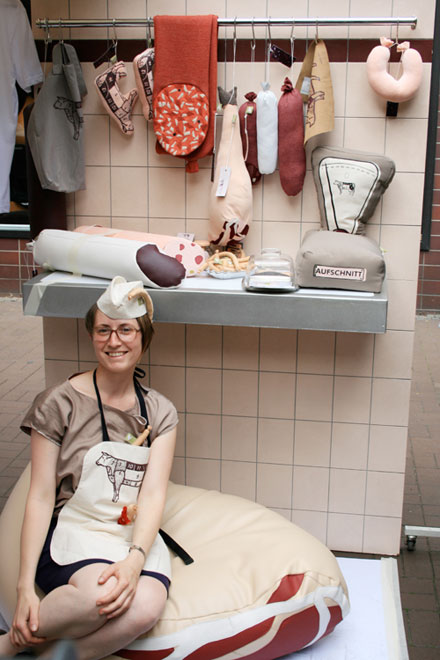
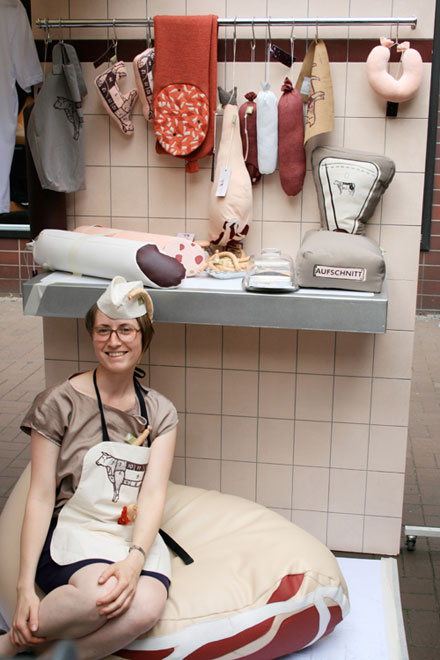
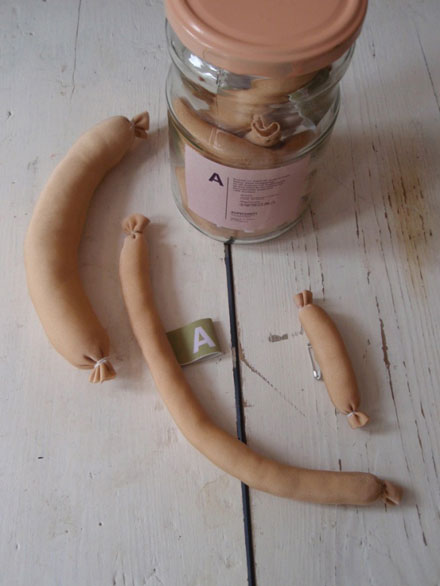
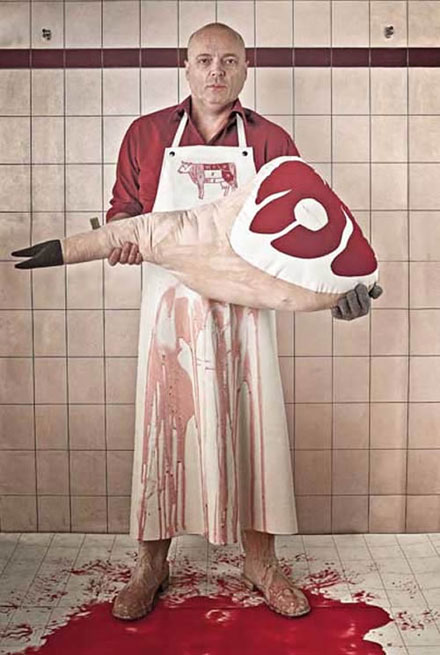
I love it when artists bring to life concepts that resonate with daily life, just like Berlin-based designer and vegetarian, Silvia Wald who opened up a butcher shop called Aufschnitt (German for “cold cuts”) complete with hams, sausages and meat cuts. They’re not real, of course, but those who are looking for real pieces of meat at her shop might find themselves a little confused.
From Oddity Central: An engineer for clothing technology, Wald started making her delicious fluffy meats in 2009, as a small project, but after seeing how popular her few sausages were, she started making all kinds of other textile foods, from salami to large pieces of ham, from materials like cotton stretch velvet, lycra, wool or micro fibre. Then she opened her own little butcher shop in Berlin, where she sells her creations to both meat lovers and vegetarians.
I know if I stick these in my home long enough I might start to look at meat a little differently, and if I were ever in Berlin Aufschnitt is definitely a place I’d love to visit!
If you’d like to create artworks that resonate with people, here are a few tips:
Find an angle that you’re passionate about
This can be an interesting slant to what you’re drawn to – Silvia chose to produce work based on meat because she is passionate about being a vegetarian – not because she likes meat. So tap into what you love, but also see how you can create a message that enforces and strengthens your passion. It’s always more effective to find a different angle rather than just saying “here’s what I like” and then just showing it.
Play up the contrast
What makes Silvia’s shop so intriguing is also because the fact that she is a vegetarian who creates vegan-friendly meat replicas: things you wouldn’t expect to appear in the same sentence when describing a vegetarian. What can you offer people that will make them look twice?
Find intersections between your passion and a message
It’s always stronger to first create a message that others can resonate with (for Silvia it’s creating meat products that are vegan-friendly), and then creating works that speak or spread that message (surprise, surprise, it’s not meat – therein lies the fun!). Once you have a clear and direct way of communicating your vision, it’s easier for your audience to connect with what you are trying to say.
Create interest via context
Silvia has done a great job of putting her wares into context – she puts her plush toys and meat pillows in a deli display; and hanging it up on the wall – just like what you’d see meat being displayed in a butcher shop. See how your art can communicate with its surroundings!
If you have more tips to share, let us know in the comments section!
I gave a speech on Friday to students of the One Academy on the topic of Design as a Lifelong Process, and I thought I’d share with you what I shared with them. I hope you’ll enjoy reading it as much as I did preparing them – I had about 70 slides, so here are the cliff notes instead.
———>
What we see is deceiving. We think we see a picture and an artist just paints and it comes out perfect. Picasso shows otherwise. Art is a process. Creating is a process. Look at Picasso’s painting of the bullfighter – and watch how he blocks out elements and constantly changes things around. Reworking elements and changing his mind, shifting his perspective and elevating it to something entirely different from when he was starting out.
In short, in life and art, everything is a process.
#1: Imagine what your future looks like.
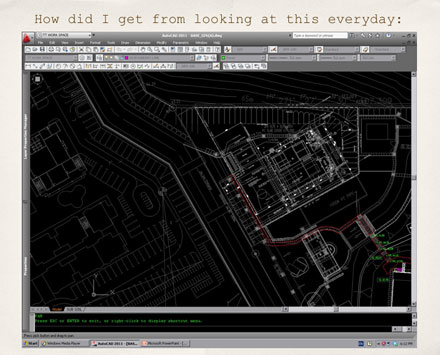
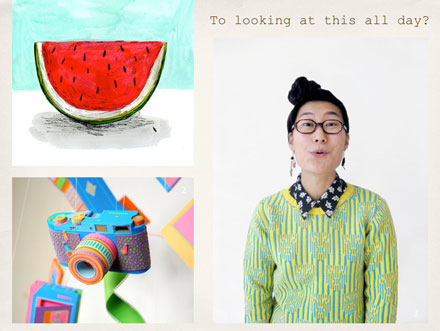
My name is Amy, and I write, draw and think up new ideas on a daily basis.
Like a lot of you, I was a student in the design field. I was a landscape architect before I jumped ship to the dark side of publishing. So I know about those late nights, client briefs, objectives and goals, SWOT plans and those eyebags under your eyes. I know a thing or two about rushing for deadlines. There was a time where I would stay up for 48 hours to get a project done (although I don’t do it anymore, thank goodness!)
So back in 2007 before I started working on Pikaland, I had a very tight schedule. I woke up at 8, went to work at 9am and came home at 7pm, ate dinner at 8pm and went to work on my website at 9pm. I slept at 3am everyday and the whole cycle repeated itself for almost a year because I wanted to do this so very badly. I was determined to hit a milestone that I had set for myself.
I didn’t watch TV for two whole years.
There is no secret to what I do. I liken it to a drip. Small drips that trickle down to form bigger things. I took small steps everyday.
#2: Identify your patterns.
I love illustrations. But back then in 2004 when I graduated I didn’t know about the field of illustration. I didn’t even know the term or the profession existed until I stepped my foot into publishing.
But something in me clicked. I realized that I got all tingly when I looked at art and illustration works. I would be rapt at bookstores, not just looking at pictures, but reading into how these people get to draw all day and make a living out of it. And when I started a blog, I realized that most of my posts were about the new illustrators that I would find, and putting them all together in one place made a lot of sense. That’s how Pikaland was born.
After four years, I’m still amazed at the patterns and the fun coincidences that I’m uncovering as I go along this journey.
#3: Sketch constantly.
My journals
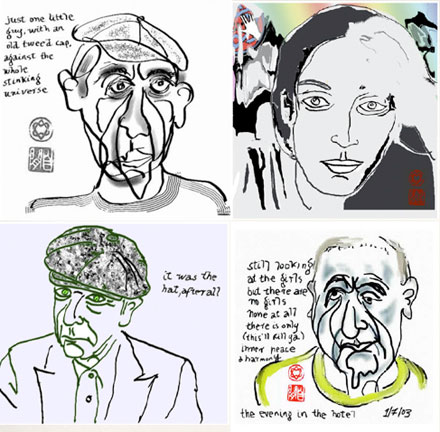
Musician Leonard Cohen sketches and draws things he uses in his daily routine as a form of meditative practice.
Is your sketchbook clean and crisp? Every line has that smoothness to it, with eraser dusts all over the place? Then it’s not a sketchbook – it’s just pretending to be one. And you’re just pretending to sketch.
Start with a new one.
Use a pen. A brush. No erasing. You’ll get better at it. You don’t need to be all clean. Be messy, write all over the place. Draw, scrunch it, experiment. Dare to turn the page, and make mistakes.
And when you’re done with one page, start another.
#4: Read voraciously
Just some of the books that I have!
How many of you read?
How many of you really just flip through books looking at pretty pictures?
There is something to be said about reading. It broadens the mind in a way that mindless TV never could. Some of the best ideas I have I got while reading. I love reading books on entrepreneurship, on art, creativity, innovations, on patterns, on psychology, biographies. Anything I could get my hands on.
Think of your mind like a giant well that you can tap upon. The more you fill it, the more resources you can tap on for the future. And as students, there’s always a constant outflow to keep up with projects and class syllabus. Are you making sure that you’re replenishing what you’ve taken out?
When you read and see a lot, you build up that well. You’re building up a huge well where you can access information from. It’s all a process. You may not need it right now, but your brain is an amazing thing once you train it. You’ll be able to recall information, and it’s a giant well to tap from – but only if you remember to fill it.
Also, write things down. Your brain is meant to come up with new ideas. Don’t waste your brain’s precious energy on remembering things!
#5: Cross pollinate ideas
People painted what they saw during the Renaissance era because back then there were no cameras. Now, more than ever, it’s your idea that makes your art different. What can you offer over a digital camera? What can you do better? You process. Sure, a digital camera processes images too – with filters and borders and everything. But that’s thoughtless processing. Automated. Anyone can do that with a touch of a finger. What can you add to the conversation? How can you add value?
Make it a daily habit to train your idea muscle. Write down 10 things that you can do after graduating that can make you money. Or 10 things to do so that you can do what you love without holding a job. Do it everyday. When it hurts to come up with more, you’re doing it right. Push yourself and don’t just stop when you’re comfortable.
Because the more ideas you have, the more it will cross pollinate with other ideas to create new ideas.
I write down ideas daily. Business ideas, a sketch for a product, a topic for a new class – it never ends for me. I read business books, browse design annuals and read lots of articles online about technology, small business, design, products, art and illustration in the hope that some of these might connect and inform a new path in what I’m doing. I go outside, sit down at a mamak stall and that sip some teh tarik – the whole process of thinking of it might jolt some new ideas into me.
Here’s some interesting cross pollination of ideas that I find to be truly inspiring:
Artist Jillian Tamaki embroidered these book covers for Penguin book by hand – marrying craft and art for a traditional media.
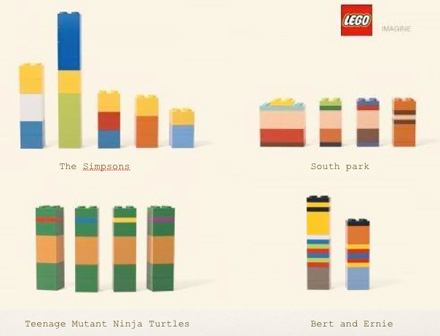
Advertising agency Jung von Matt shows how to manipulate simplicity via pop culture and Lego blocks.
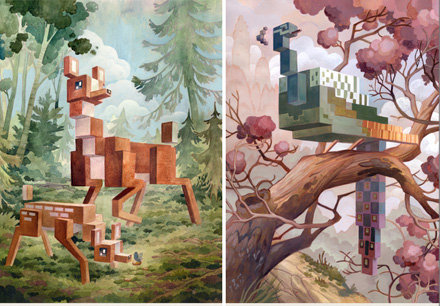
Artist Laura Bifano marries the idea of digital pixels with hand-drawn elements – along with a beautiful concept behind her collection ‘Menagerie’
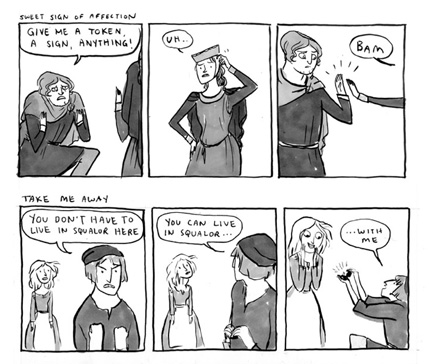
I started paying more attention to history, thanks to Kate Beaton, who adds pop culture to history in her comics.
#6: Don’t be afraid to fail
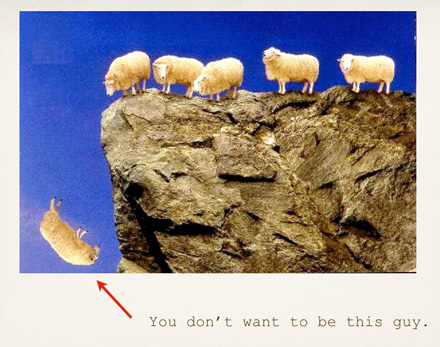
Don’t follow the herd. Don’t look at what your friend is doing. Just do what you want to do. Being in a university is the best time to experiment!
If everyone falls off the cliff, don’t you wish you had turned back and asked instead?
What’s the worst that can happen?
Maybe people will laugh at you. You most certainly won’t fail your class if you show up. You are paying to have people look at your work. You have a captive audience! You won’t ever have that again.
So, fail. cry, then pick yourself back up again.
#7. Be curious.
Newspaper cutting. Source unknown
Ask questions.
Google is an incredible tool. But it is just a tool. It depends a lot on the person to ask the right questions.
Frame your questions, learn how to utilize it to its fullest potential. An illustrator’s value isn’t just about painting pretty pictures. They get to translate words into visuals – and that entails knowing a lot about the subject at hand. So search carefully.
#8. Do whatever you want.
Because no one knows what will happen in the next 2 years, let alone 10. The landscape for arts and creatives (and everything else!) are moving fast and the only way is to be nimble on your feet.
There is no one way. There isn’t a right way. Change, evolve, experiment – but most of all have fun and just get out there and do it.
Nobody told Laurie Anderson to put a speaker pillow into her mouth and try to sound like a violin, but she did it. Now what’s your excuse?
——————>
If you’ve come this far, thanks for reading! I mainly tailored it for students, but the advice in here is suited for everyone and anyone who has ever felt a little lost at some point in their life and career.
Share with me: What other advice or experience would you share for those who are looking to design (or for that matter, re-design) their life?
Ez has a special post going on over at Creature Comforts – a special segment called Things I’m Afraid to Tell You, and I was just thinking about this the other day. About how bloggers may seem to have it all when the reality is that we are just human. I thought I’d join in because I’ve been in one way or another affected by this phenomenon and I want to put it out there that we’re all not as shiny as you think we are.
I have a limit for looking at blogs/Twitter/Facebook.
I get anxiety attacks when I read too much about what other people are doing. I am competitive by nature and having a web presence does nothing to quell these fears. Sometimes I feel like I’m being too hard on myself – while many people aren’t aware of how blogs are just a snapshot of someone’s life, likes and dislikes that it doesn’t represent the whole picture – I’m a blogger myself and I should know better; but I feel envious all the same.
Also, I’ve taken time to be in the present more as I pry myself away from social media. I’ve had bouts of loneliness wash over me at the most random times a few years ago (read this if you want to know more), and I’m careful to maintain a balance.
I love working with illustrators than actually being one.
I draw (more now than ever), but I’m not deluded – I still have a long way to go. I love how seeing how other people work and understand the reasoning and concept behind a piece, which was why I started the blog in the first place.
I also find that I’m drawn towards art and the subjective more and more – which leads to me asking myself a lot about what constitutes good art and illustration. I’m still exploring as I type this!
I used to be afraid to look at myself in the mirror for days
I had a really, really bad bout of acne when I was a teenager, and I had braces on top of it all. Back then, I couldn’t bear to have my pictures taken and I still fidget when I have to be in front of the camera up to this day.
So I totally understand what it feels like to be stared at for the wrong reasons and be asked all sorts of insensitive questions. For those who suffer from low self-esteem – I know exactly how you feel.
And there you go! Remember, behind every blog is a person with feelings, warts and all.
Hi there and welcome to Pikaland! This is my personal playground where I write and research about art, creativity, and the pursuit of art entrepreneurship. Enjoy!
All images are subject to copyright by their respective owners. Please be courteous and add their names when you share their work (i.e. on Pinterest!) It would make me really happy if you could link back to Pikaland when you blog about stuff you saw over here too. Thank you!