Book review: Draw Paint Print Like the Great Artists

Draw Paint Print like the Great Artists

Draw Paint Print like the Great Artists


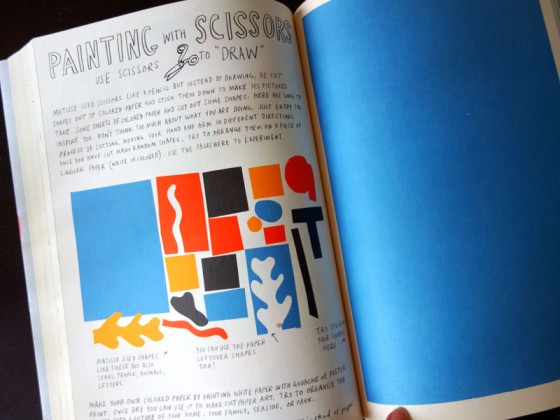
Marion Deuchars has done it again. In 2011 I reviewed her book Let’s Make Some Great Art (review here) and it was a unique book which made me squeal with delight when I peeled open its pages back then. In her latest book, Draw Paint Print Like the Great Artists, she reprises the original concept of inviting the reader (or in this case, the artist) to dabble their fingers into some paint and let loose in between the pages of her book.

Of course I still squealed all the same when I got her latest book (because it’s just so PRETTY!) You’d think that books that were meant for kids aged 8 – 12 wouldn’t have garnered the reaction I had, but still, there’s something to be said about books that make you all excited; you don’t see too many of them often enough.
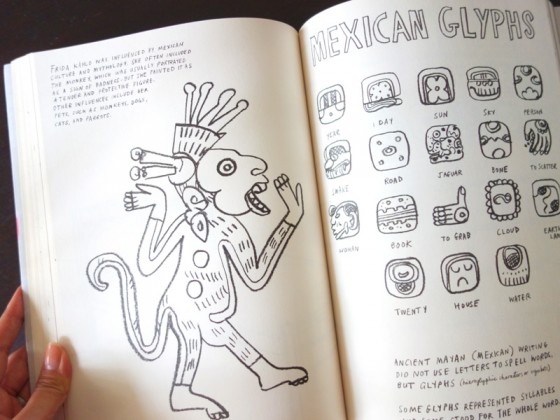
Draw Paint Print like the Great Artists


In this book, Marion expanded on one of the themes of her first book – taking on inspirations from artists such as Klimt, Matisse, Warhol and Miró and coming out with creative prompts that allows to learn about the artists through play. While I noticed that there wasn’t a proper table of contents to show which artists were being featured, I was happy to find the list of artists at the back of the book, complete with a mini bio to boot! There’s 18 artists in all, so there’s a good variety of styles for you (or your little one) to try out.

I don’t think that this book is just suitable for kids however; as doing so would be a missed opportunity for other artists out there who are struggling with finding new ways of working. I think that this is a great book for any one at any age – whether you’re artistically inclined or not. Marion has done a wonderful job of making art accessible, using everyday language and humanising the artists featured that it makes one feel hopeful of being one themselves. And even if they don’t, at least they’ll have a great time exploring (or re-exploring) the world of art while they’re at it.

You can get a copy of the book here (via Amazon) and if you’re not sure how it all looks like inside the book, I made a video of its insides:
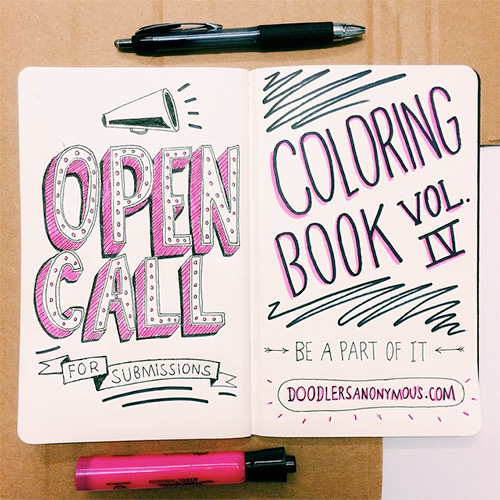
Doodlers Anonymous’ Coloring Book Vol. 4 Open Call

Doodlers Anonymous Coloring Book Vol. 4


If you haven’t heard of Doodlers Anonymous’ annual coloring books, then you’re missing out. This year in particular, in fact – because there’s an open call for entries and it ends today, the 7th of October. If you think you have got what it takes to be one of the 60 artists featured in the 64-page coloring book, then it’s time to whip out your Sharpies and doodling gear; because it’s going to get intense real quick. Oh by the way, the deadline is less than 24 hours away.

One, two, three – draw!

Life as an experiment: What to do when you have lots of ideas

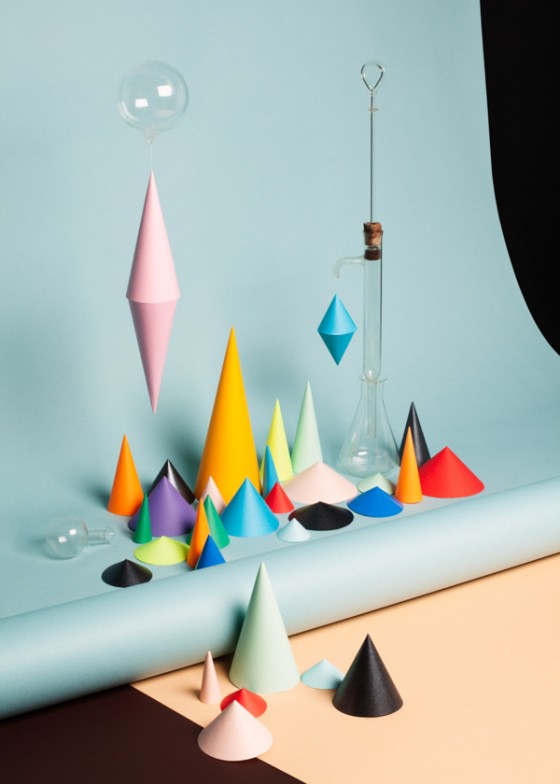
Adrian Woods & Gidi van Maarseveen

In the Work/Art/Play class that I’m teaching right now, an interesting discussion began on the topic of having too many ideas, too many experiments that might (worryingly) lead nowhere in an artist’s journey.

It’s a very well known affliction that plagues creatives – and the term creatives is a very loose one. These could very well mean entrepreneurs, who may have a pool of ideas to tap from for their next venture; or a designer who has a big sketchbook ready to go for their next collection or season. For an artist, it could come to mean experimenting with the use of various medias to come up with a series or even to redefine their personal style as they find ways to mix things up.

I have lots of ideas. Some of them didn’t quite turn out, and some of them did. A few years ago I began to keep a sketchbook that listed out my ideas; I filled them with pages of pages of thoughts, comments, figures, sketches and with it, possibilities (although these days, instead of just using a sketchbook, I found that Trello is a great app in helping me sort out my ideas.) And it wasn’t just a continuation of one idea either – every other week I would come up with a new idea; or I would stew on a new idea and blend it with a previous one.

But no matter how many entries there were in my book, I was resigned to the fact that I only had two hands. I know myself enough to know that if I were to dabble in a few ideas, they would never turn out well enough for me to know if it was worth pursuing. So what I did was to just focus on one idea at a time – I owed the idea that much at least. To bring an idea to fruition takes time, dedication and effort; things that I knew would be scattered if I tried to juggle too many at a go.

It was still an experimentation none the less. But I choose to focus on one at a time so that I can properly document and figure things out as I move along. Is it working? Is it not? Can I do better? Do I want to keep doing this? Will I make a difference? I question the idea (and myself) constantly at every step of the way – much like a scientist who keeps a record of an experiment to see its progress.

And once you’re committed to the idea, you need to give it space and room to grow, to breathe, and a chance for it to live out its life. You’ll have to nurture it, see if it can stand on its own two feet, or if you’re lucky – to see if it could fly. But first, you’ll need to make a decision: which idea goes first? Pick one. Just one. And start from there.

A good friend reminded me once when I told her that I had trouble picking one idea, and she said this little gem of an advice that I carry to this day: “It’s good to have lots of ideas – this way we can execute them one by one until we’re 60. We’re all set!”

So here’s a couple of tips and reminders:

  • Don’t let fear stop you from experimenting. And fear takes on many forms: fear of failure, fear of missed opportunities, or even plain old irrational fear.
  • Experiments always leads you somewhere, and often times it leads you down a path you might have considered before. Enjoy it and soak up the process!
  • Ideas on paper are just worth the paper they’re scribbled on – especially if you don’t start.
  • If you can juggle a few experiments at a go, by all means feel free to do so! Just be aware that if you drop the ball on one, the rest might follow – and you might not know what the outcome would be if you had focused on just one.

SHARE WITH US:

What about you? What works for you when you have lots of ideas? Do share your thoughts and experience in the comments below!

[Photography by Adrian Woods & Gidi van Maarseveen]